



It’s 2026 and times are (understandably) changing, but we’ve yet to decide if it’s in the interest of the individual: the professional, the creative, the small business owner.
We’ve been riding the AI wave: some of us by the enthusiasm for the new technologies spearheaded by AI, others pushed to remain competitive, all moving forward for profit and progress, albeit hesitant since nobody really knows how the technology is evolving.
In the AI landscape, we’ve learned the hard way that “just one more prompt” is never just one: a long context with touching and retouching engenders a long(er) answer, and you’ve suddenly burned through all your tokens before lunch.
The phenomenon has been coined “The Token Apocalypse”, the realization of the soaring costs of Generative AI, especially in AI vibe coding, where companies like Meta spent approximately $221 million a month (that’s $2.65B a year!) last year alone, enough to pay yearly salaries for thousands of employees, but that’s another discussion for another article.
Harvest’s new usage-based pricing feels eerily similar to AI token billing: every project, client, and invoice quietly ticks up your bill, which is exactly the kind of unpredictability you don’t want in project management software.
It’s ironic that Harvest’s main pitch for usage-based billing is that you’re billed for what you use, so you won’t overpay, yet this kind of gaslighting won’t stick around for long. Users started cussing and complaining on Reddit about insane price hikes due to the new billing policy: going from $170 to $2,162.50 for a single user, and from $1,927 to $16,200 per year for a small company.
Understandably, users packed their bags—tasks, I mean—and took to Reddit and ChatGPT fortune cookies to look for predictable, more affordable software.
If you’re looking for Harvest alternatives, here’s our breakdown of 6 project management software. Click to jump to the review (I’ll keep yapping in the meantime).
Best 6 Harvest alternatives
- Paymo – all‑in‑one software for professionals and small agencies
- Toggl Track – flexible time tracking with 100+ integrations
- Clockify – employee monitoring with advanced reporting
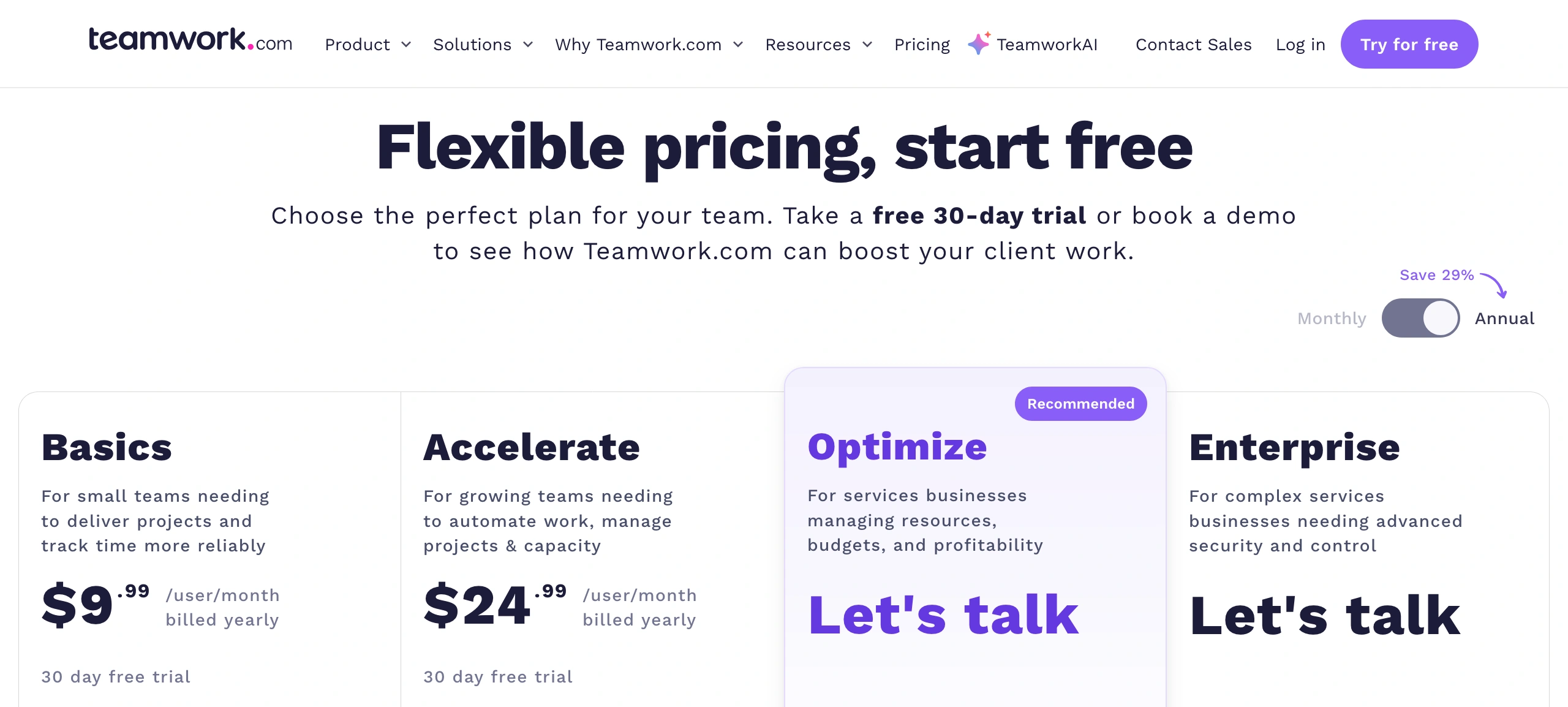
- Teamwork.com – team app with PSA-style operations
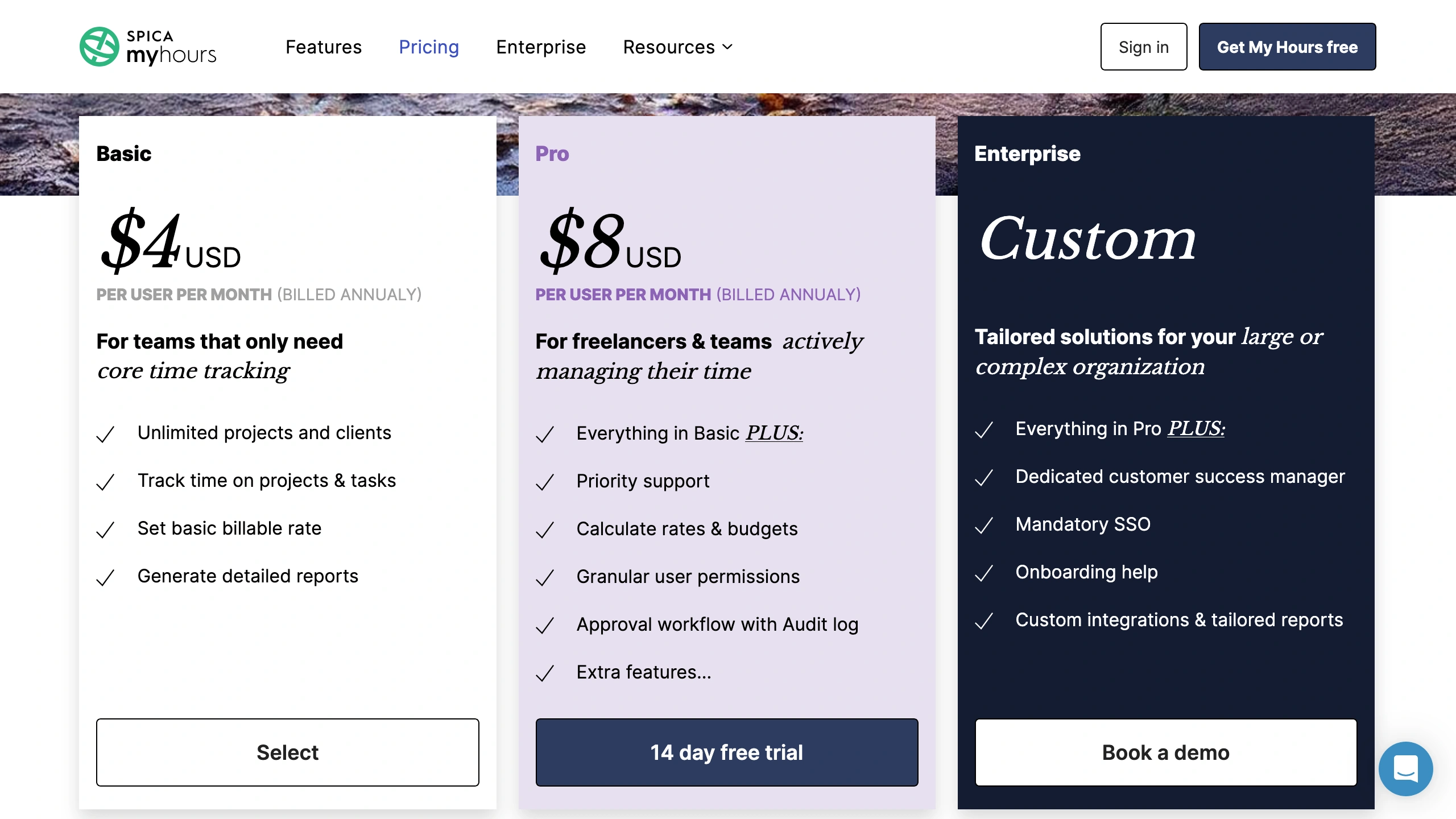
- MyHours – simple, low-cost timesheet app
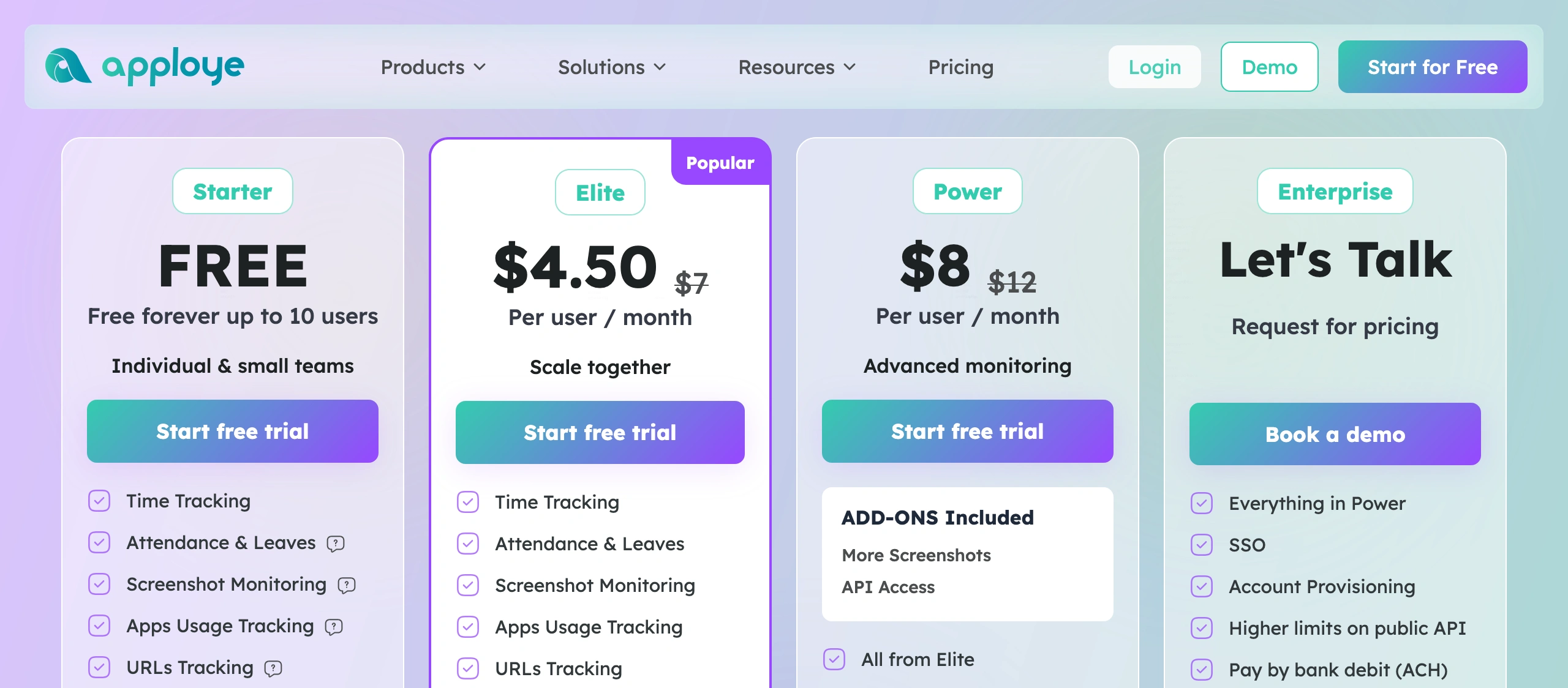
- Apploye – workforce monitoring for field teams
92
of 100
Pros

simple, clean UX
advanced project management features
time-tracking and timesheets
profitability tracking and reporting
resource management and team scheduling
Cons

can feel overwhelming to new users

89
of 100
Pros
polished interface
automatic time tracking
reporting and analytics
Cons
fewer project management software features
cumbersome when managing large projects
87
of 100
Pros
fit for location-based GPS time tracking
automated time tracking functions
screenshot captures
Cons
free functionalities are severely limited
occasional glitches and downtime reported
87
of 100
Pros
advanced project management features
time tracking and resource allocation
unified file organization
Cons
steep learning curve
can be overwhelming to new users
82
of 100
Pros
clean UX
compliance-friendly time-tracking
complex reporting
Cons
lacks advanced features of a PM tool
it could use more integrations
78
of 100
Pros
automatic time tracking
polished UX
fit for remote and field teams
Cons
intense employee monitoring
RemoteTrack taking random screenshots
URLs tracking
Canceling your Harvest subscription
“Unpredictible, opaque, and shockingly expensive” are the three qualifiers for Harvest’s overhaul and pricing push. Here are the main contention points against Harvest:
1. Sudden steep pricing with usage fees on top of per-seat pricing
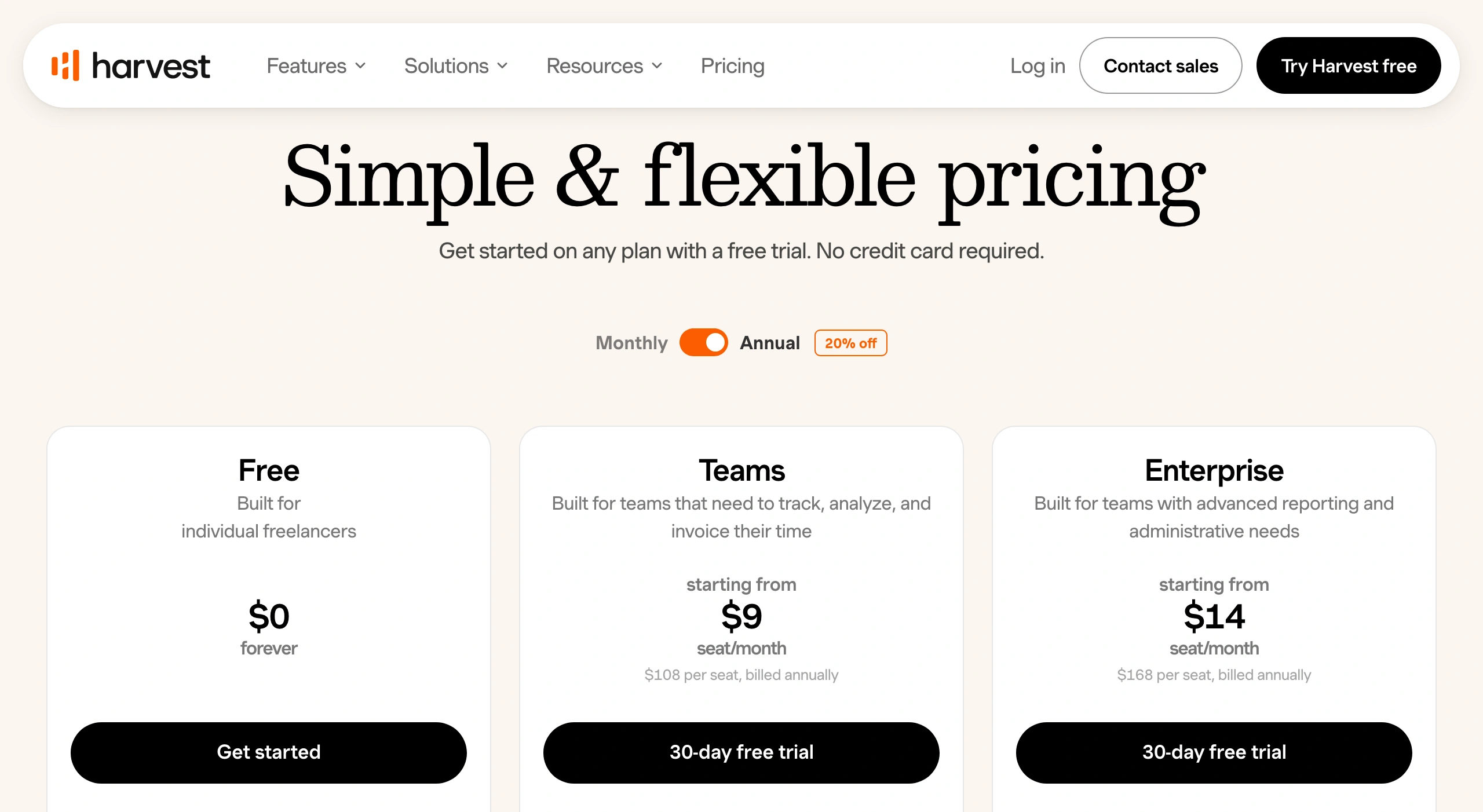
Historically, Harvest was a simple per‑seat tool, and although the 2026 model keeps per‑seat rates (e.g., Teams from about $9–11 per user per month, Enterprise from around $14), it now adds usage‑based fees on top of that. The new policy comes as a result of Bending Spoons’ acquisition of Harvest in 2025, a tech conglomerate with a track record of buying established SaaS products, overhauling them, and making steep monetization changes.
The extra “usage-based” fees are triggered by account activity, such as additional invoices, projects, clients, and tasks beyond the base allowance. So you can imagine that busy agencies with many active projects and recurring invoices can see costs escalate far beyond the headline per‑user price.
By the time of writing this article, Harvest dropped the mandatory credit card for free trials and delayed usage-based billing to the second billing, as seen below:
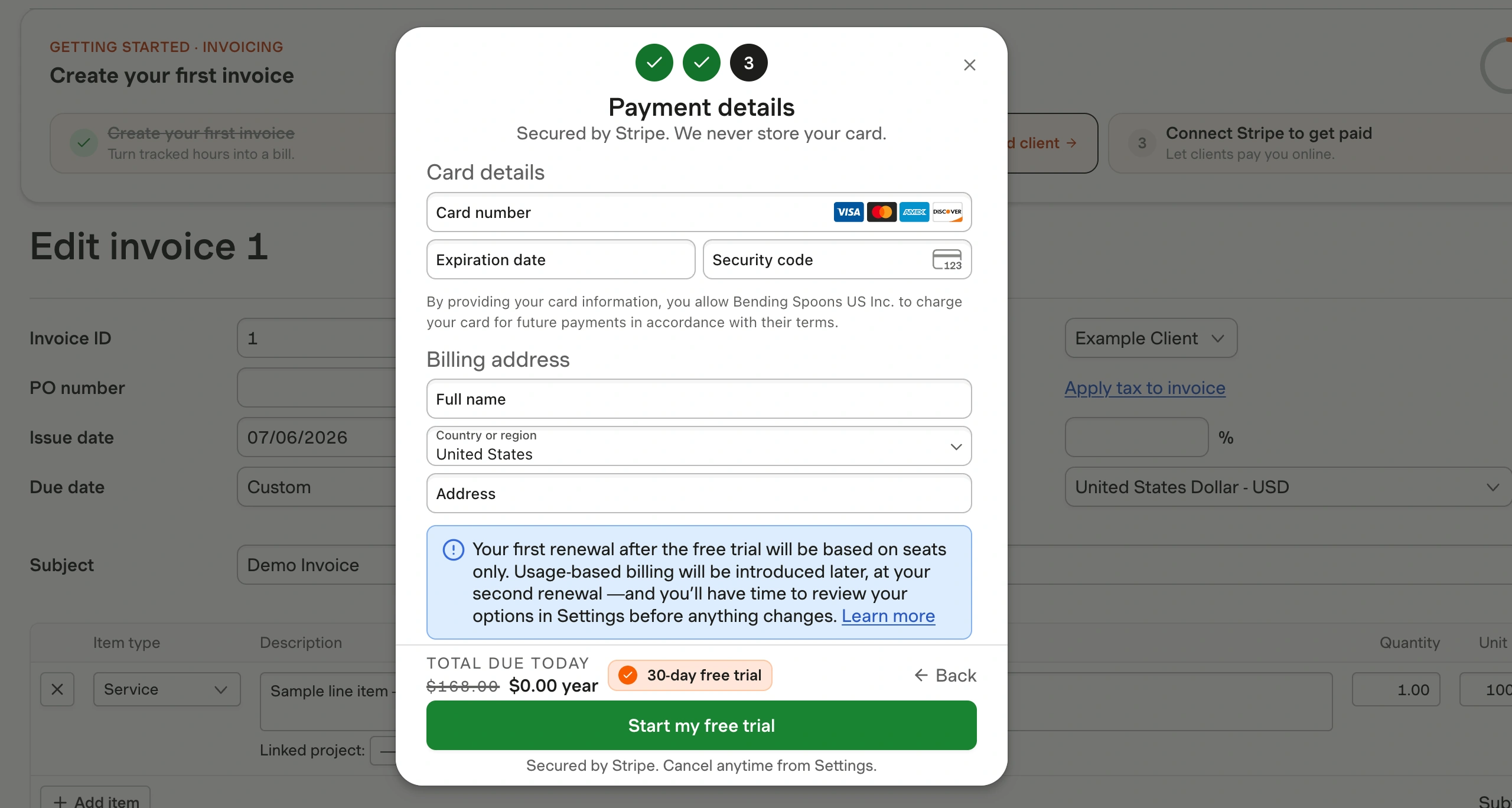
However, some Harvest users objected to being auto-migrated to higher tiers (Enterprise for “unlimited usage”) without a clear opt-in. Emails stated that the new plans “better match how customers are currently using Harvest,” but the billing mechanics treated archived users as still on paid seats unless you manually reduced the seat count. And we’re not even including the costs of integration with other tools or the Stripe surcharges.
2. Lack of transparency and predictability
OK, there’s a usage-based pricing scheme, so what? The major complaint is that Harvest does not publish the per-unit usage rates (what you pay per extra invoice, project, client, or task) on the public pricing page, only the quick quote calculator for Team/Enterprise paid monthly or yearly. So the advertised per‑seat price no longer reliably indicates what a typical month will cost, making it hard for teams to forecast budgets. Eventually you’ll end up feeling that the model is a “gotcha” once you cross invisible usage thresholds.
I’m going back to my illustration on usage-based pricing for AI tools. For AI tools, metered pricing kind of makes sense: each token and API call has a real compute cost, so usage‑based models are now standard. You expect some variability: some months will involve heavy experimentation that costs more, while other months will be quieter and thus cost less.
But for a bread‑and‑butter project management software or time‑tracking app, you usually want the opposite: predictable “per user, per month” pricing where you don’t have to think about whether adding one more client or invoice will push you into “premium overage” territory. Harvest’s move toward usage fees layered on top of seats essentially imports AI‑style billing anxiety into the tool you use to manage your work, which is ironic: your PM app is supposed to reduce stress, not emulate Claude’s token dashboard.
Wait, there are “thresholds” (more like limitations) and conditions: “With Flex on the yearly plan, you won’t be charged for usage as long as you stay within these included thresholds: up to 12 projects, 7 tasks, 7 clients, 50 invoices, and $50k invoiced,” according to one Redditor.
3. Disproportionate impact on agencies and trust issues
Hungover tokenmaxxing employees burning through tokens as a badge of productivity might see nothing wrong with Harvest’s usage-based pricing. To some users, the revamp brought about new wind for an old sailboat, suiting freelancers with a reserved but steady clientele.
Usage fees affect dozens of projects, clients, and invoices typically linked to agencies and service firms (exactly the users that Harvest targets), and these very small businesses tend to be hit hardest as their activity grows. Imagine being pushed to pay several times your previous bills, or balancing the search for alternative tools with flat pricing against exporting all your data by the time your subscription expires.
After consistent backlash, even if Harvest makes positive changes in pricing and policy, the trust issues will persist. The fact that similar post‑acquisition pricing changes have happened with other Bending Spoons products (such as Evernote and WeTransfer) erodes trust. Users will always be worried about a pattern of aggressive monetization and limited feature evolution over time.
The new Harvest – a brief review
Harvest in 2026 is still the time-tracking-plus-invoicing tool it used to be, but more polished and with a nicer interface, with a calendar-style time view that most timesheet software have.
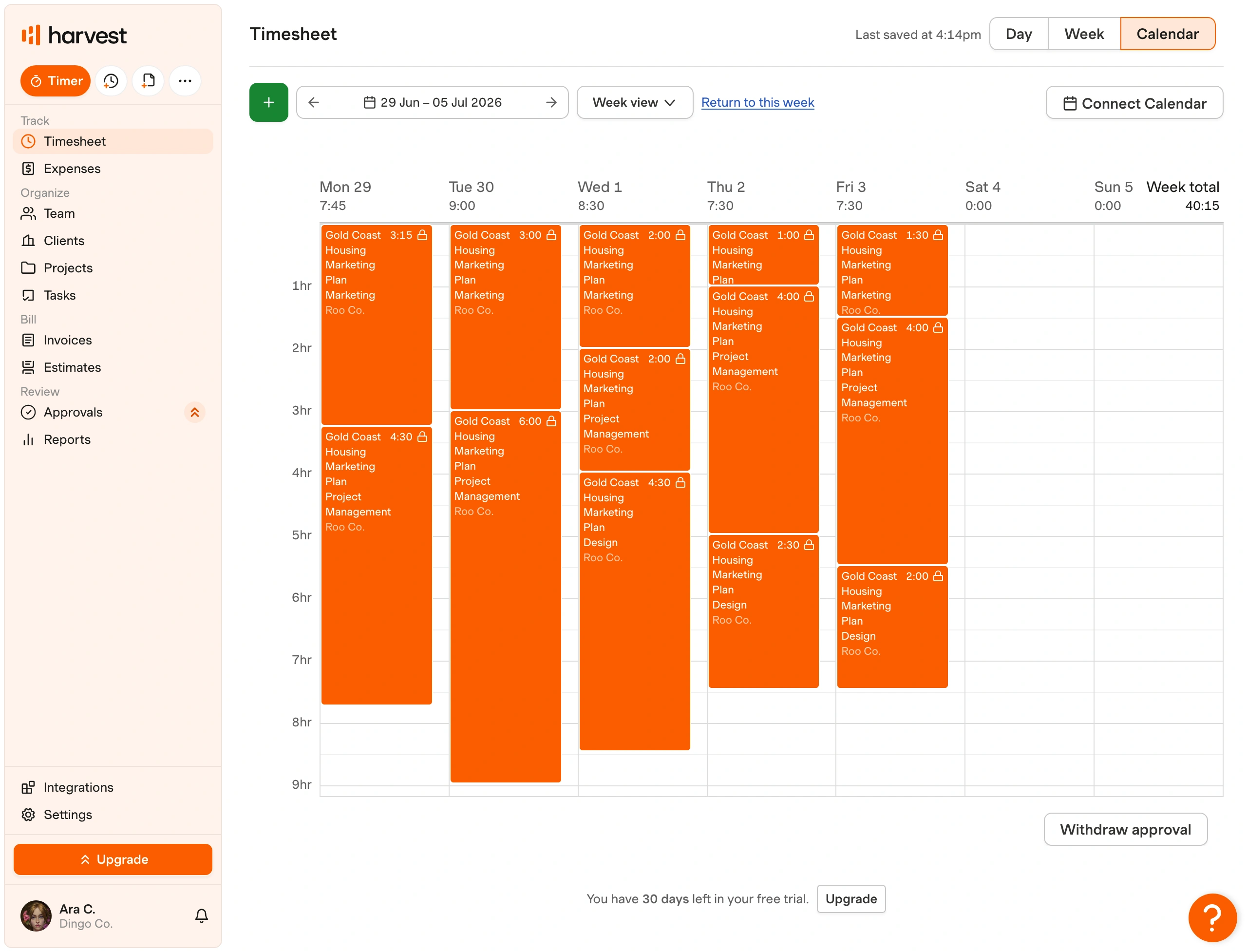
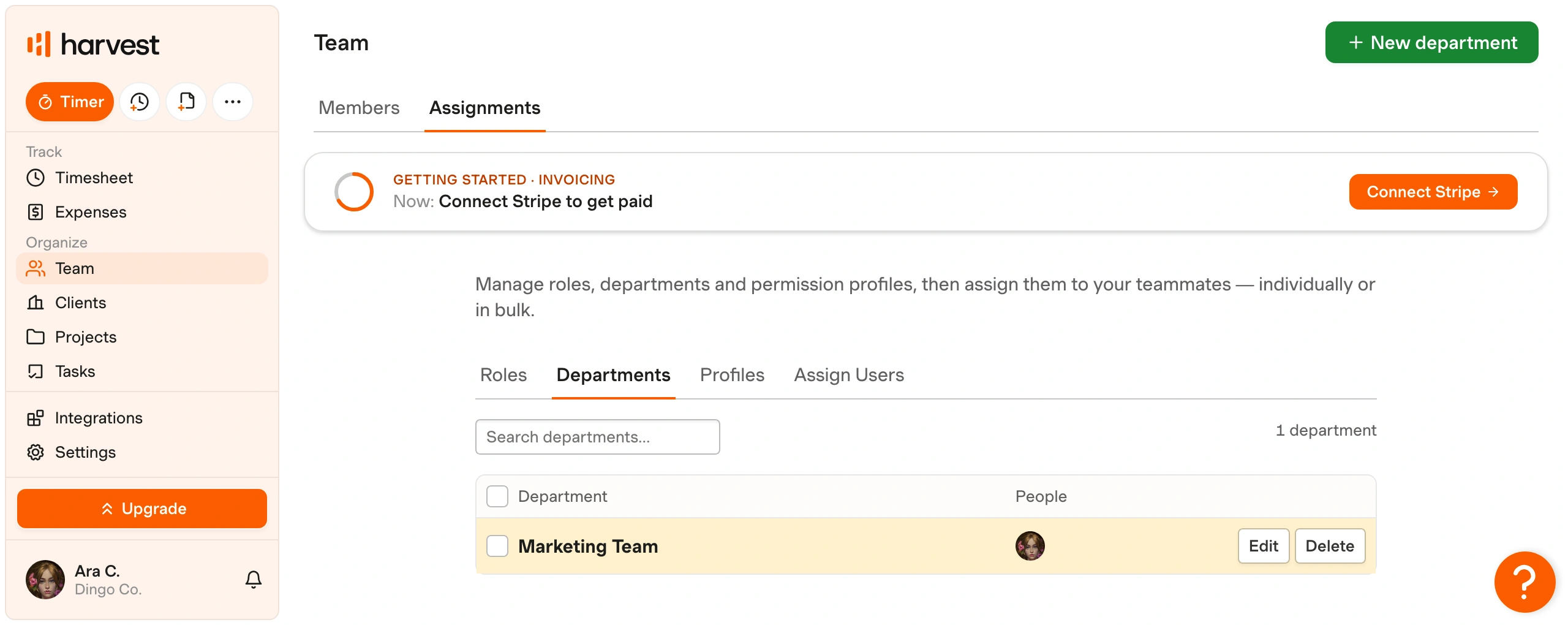
On the business side, Harvest also introduced invoice branding controls (remove Harvest watermark, add your colors and banners), a six‑role permission model with custom roles, expense reimbursement flags and approvals, capacity vs logged‑hours comparisons, an overdue‑invoices summary view, and time approval in timesheets.
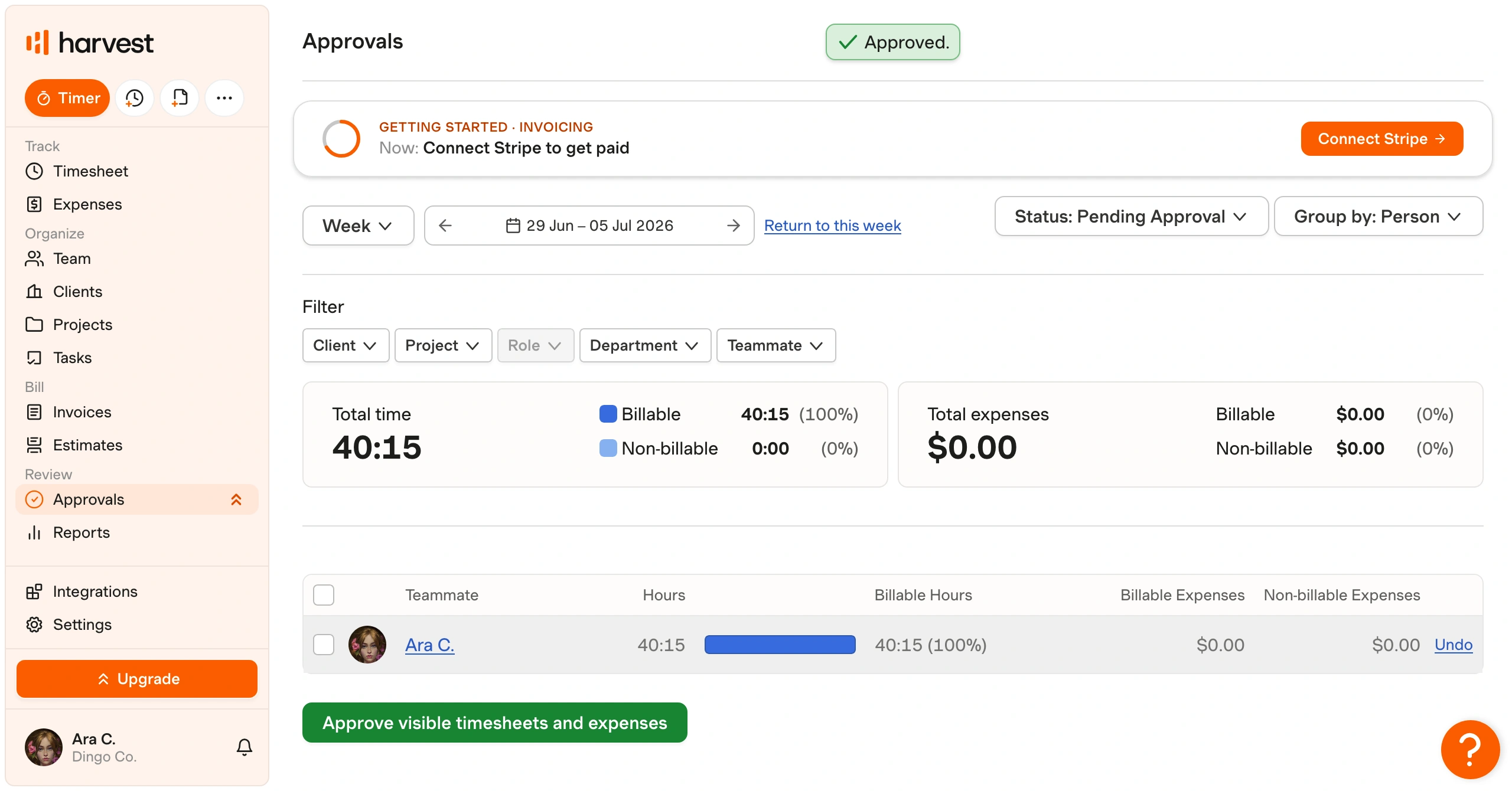
The expanded role/permission system and expense reimbursement approval flow are meaningful quality‑of‑life upgrades for teams that previously had to work around coarse admin controls.
Removing Harvest branding, customizing invoice colors/banners, setting invoice defaults, and surfacing outstanding invoices by overdue status help teams present more polished client communications and stay on top of cash flow, though I wouldn’t say it overdelivers compared to other invoicing software.
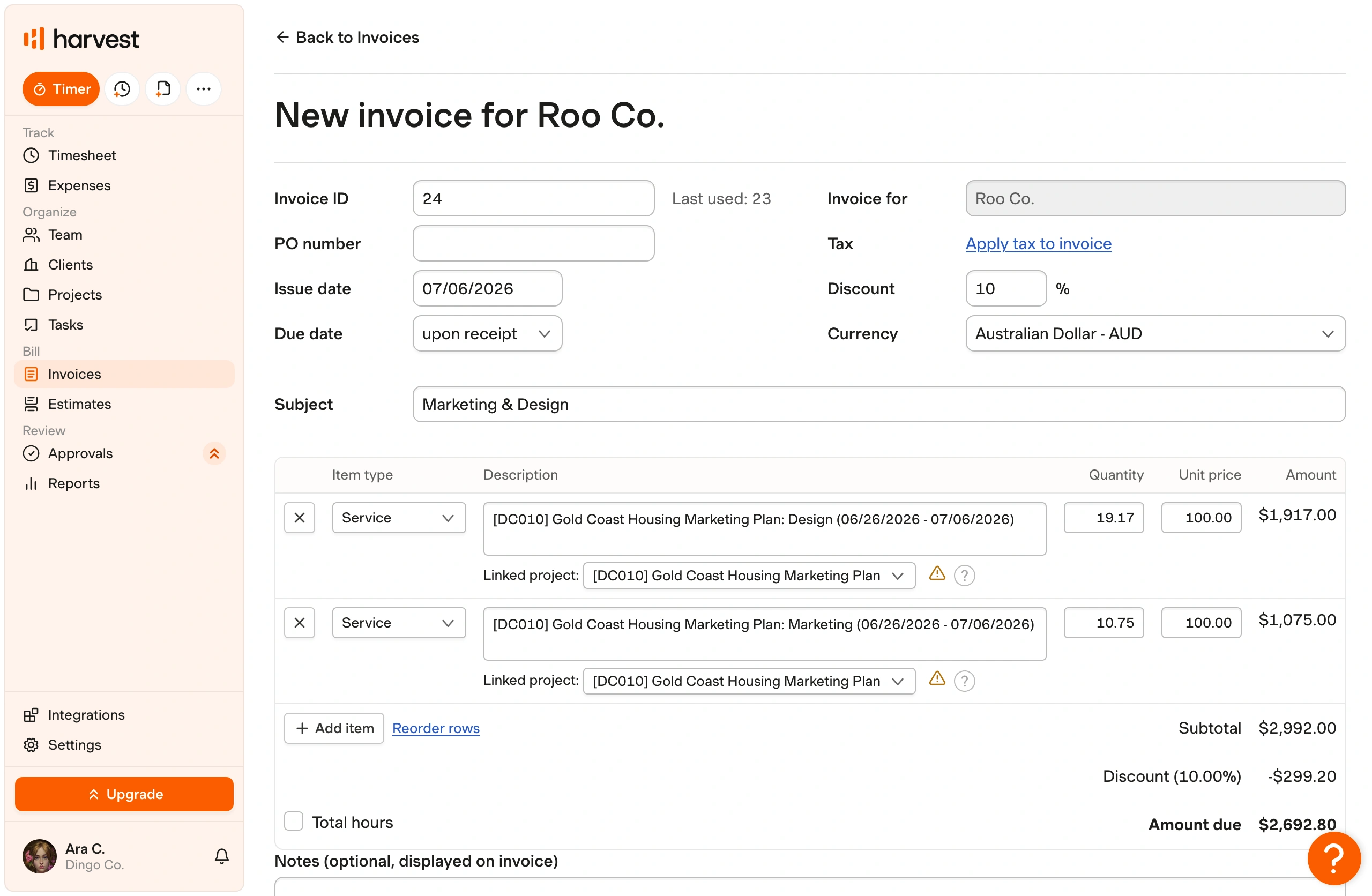
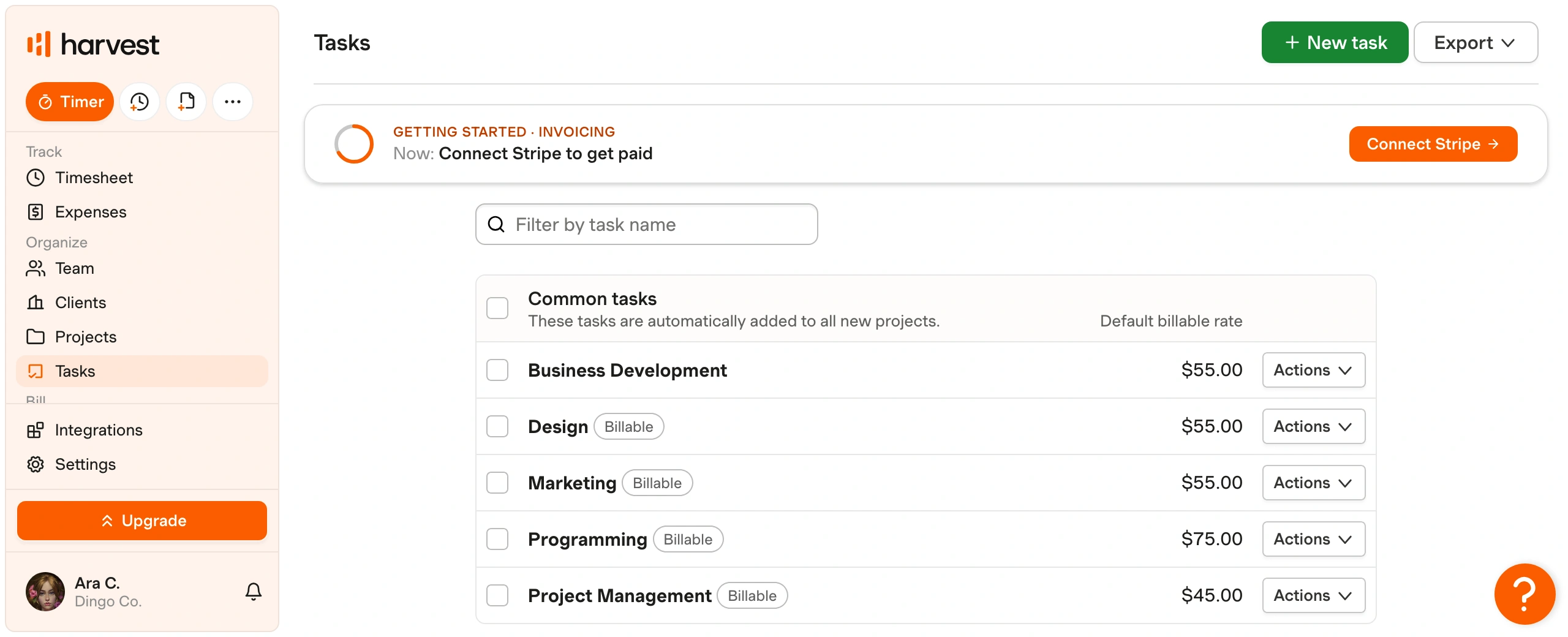
While you can create projects, budgets, and tasks, Harvest lacks full task management boards, detailed task lists, or timelines; teams still need a separate PM tool for planning and execution. This “timer + budgets + invoices” approach hasn’t changed much in the overhaul, which is limiting for agencies wanting a single system of record. Here’s your task list in Harvest:
Clients generally cannot view reports or project data unless they are added as paid users, which increases seat counts (the free plan is limited to one user and two projects, making it unhelpful even for tiny teams). Not to say that other project management tools have an integrated client portal, such as Paymo.
Sure, Harvest in 2026 looks more mature. It’s a more refined version of the same core tool, but it is not fundamentally more powerful in the areas that are helpful to scaling agencies and small businesses. The product changes are incremental compared to how aggressively its pricing was pushed. In other words: Harvest in 2026 is still a good time‑tracking and invoicing platform with some standout touches, but the rationale for ballooning pricing sure wasn’t driven by value.
How to choose a Harvest alternative
Before switching from Harvest, look beyond the headline price. The right alternative should match how your team tracks time, manages projects, bills clients, and reports profitability. Here are the main things to consider:
Pricing
Compare the total cost for your team, including users, projects, clients, invoices, and any usage-based fees. A lower starting price doesn’t always mean a lower overall cost.
Time tracking
Check whether the tool offers the tracking methods your team actually needs, from manual timers and timesheets to automatic tracking, mobile apps, or reminders.
Project management
If you use Harvest alongside another project-management tool, a simpler time tracker may be enough. If you want to consolidate your workflow, look for built-in projects, tasks, scheduling, and resource management.
Invoicing and billing
If tracked time needs to turn into client invoices, check whether invoicing is built in and how easily you can apply billable rates, expenses, approvals, and taxes.
Check how tracked time becomes an invoice. This is one of the biggest differences between Harvest alternatives. For each alternative, check whether your hours flow directly into a finished invoice, require an integration with your accounting or billing software, or need to be exported and entered manually. The fewer steps between tracking time and billing a client, the easier it is to avoid missed hours and manual reconciliation.
Paymo has native invoicing that can pull tracked time directly from timesheets into an invoice, including approved time entries. Clockify can also create invoices from tracked time, while My Hours automatically pulls billable time and expenses into customizable invoices. Toggl Track turns tracked hours and billable rates into invoice-ready data and can create invoices from reports, although its workflow is more closely tied to exporting or using invoicing alongside the time-tracking platform.
Reporting and profitability
Look for the reports you rely on to understand billable hours, utilization, project profitability, budgets, and team performance.
Integrations
Make sure the alternative connects with the accounting, project-management, CRM, and communication tools your team already uses. Switching time trackers is easier when you don’t have to rebuild the rest of your workflow.
Team monitoring and privacy
For remote or distributed teams, consider whether you need screenshots, app and website tracking, GPS, or activity monitoring—and whether those features fit your team’s privacy expectations.
Migration
Check how easily you can move clients, projects, users, historical time entries, and other important data from Harvest to the new platform. The goal isn’t necessarily to find a tool with every feature Harvest has. It’s to find one that covers the workflows that matter most to your team without adding unnecessary complexity or cost.
Which Harvest alternative is best for you?
The right Harvest alternative depends on what you need beyond basic time tracking.
- Paymo is best for teams that want time tracking, project management, and invoicing in one place.
- Toggl Track is a good fit for teams that want straightforward time tracking with a lightweight project-management layer.
- Clockify works well for teams looking for flexible time tracking and employee monitoring at a low entry cost.
- Teamwork.com is better suited to agencies and client-service teams that need deeper project and resource management.
- My Hours is a practical choice for freelancers and small teams that want simple timesheets and project tracking without a lot of complexity.
- Apploye is geared toward remote and distributed teams that need time tracking alongside screenshots, app and website monitoring, and productivity insights.
If keeping costs at zero is your priority, several Harvest alternatives offer free plans, but the limits vary significantly.
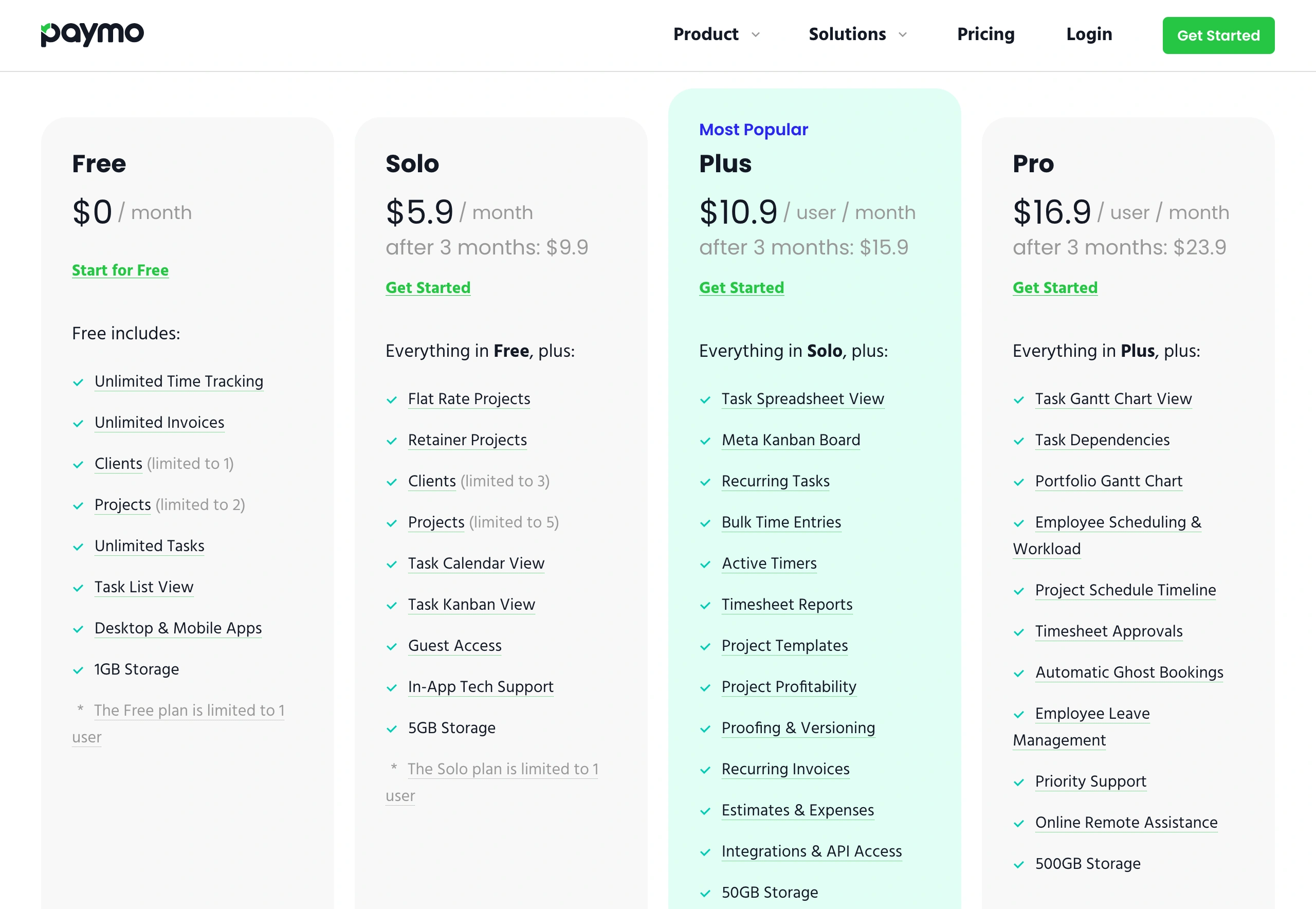
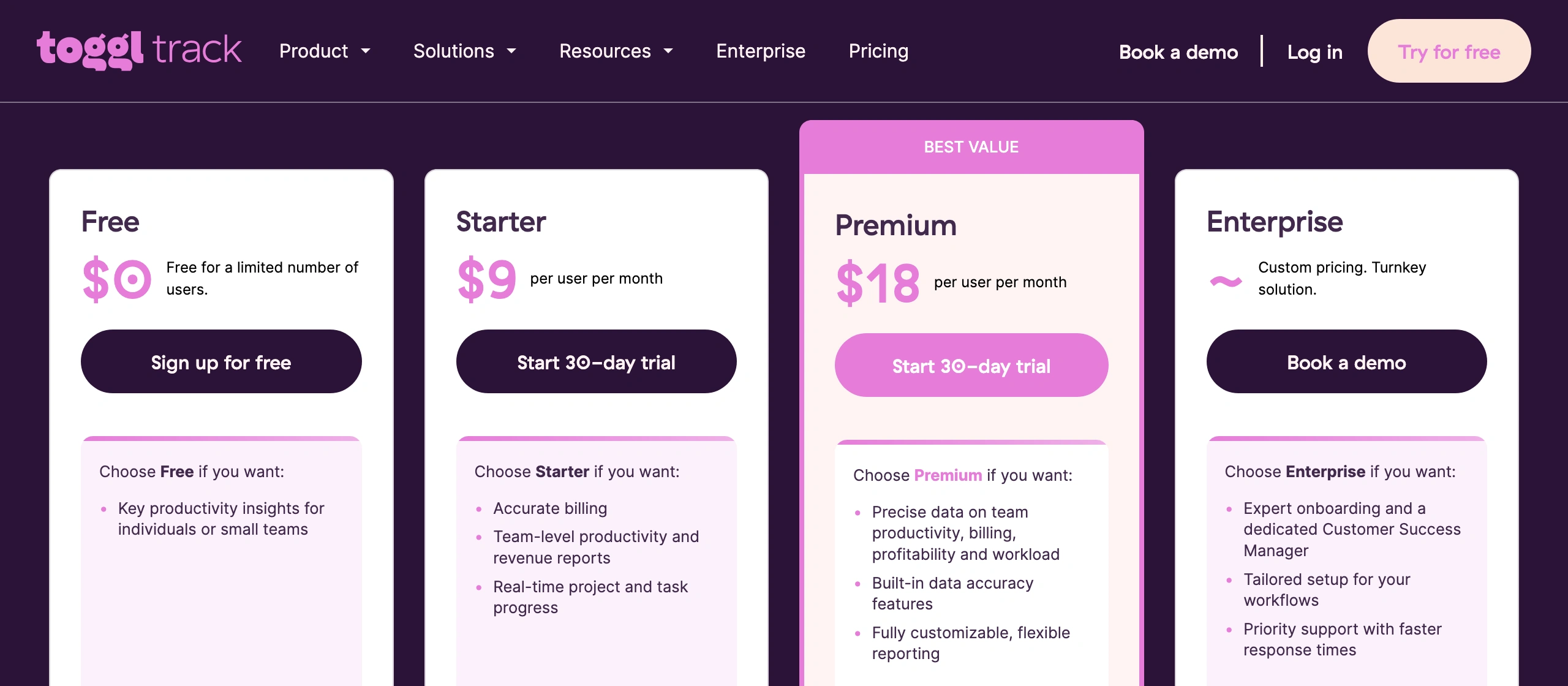
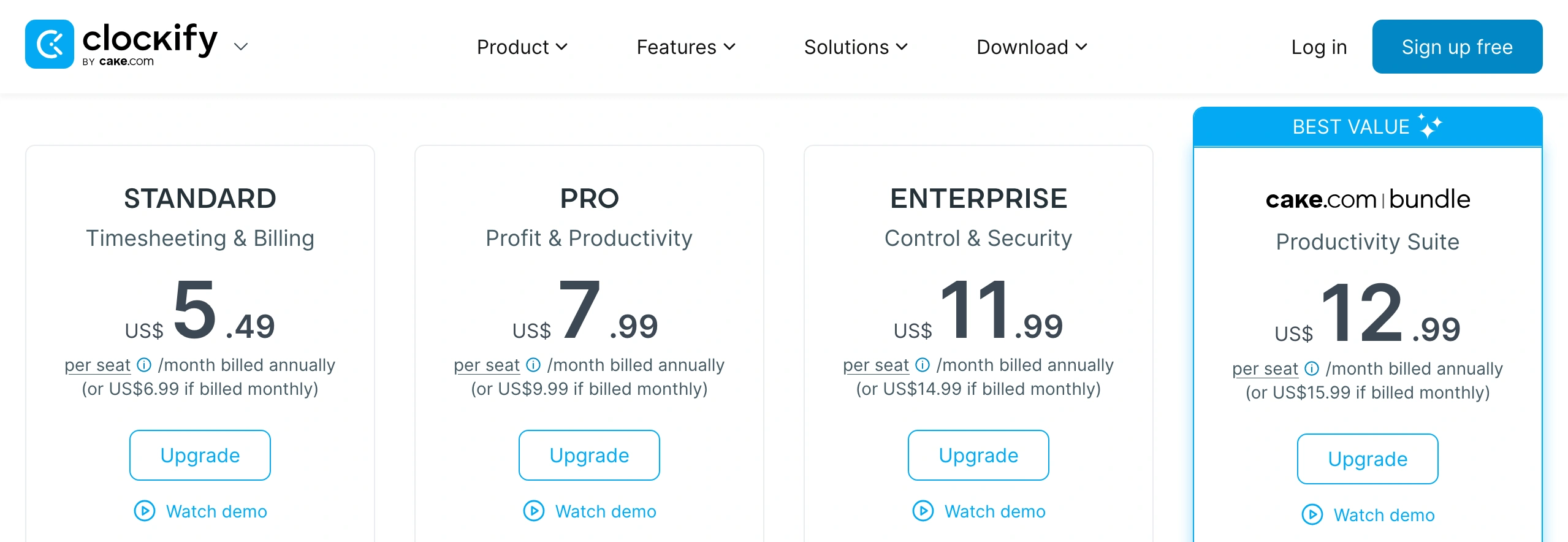
Paymo has a free tier for one user, while Toggl Track supports up to 3 users and focuses on core time tracking and lightweight planning. Clockify and My Hours both offer free plans for up to 5 users, making them more practical for small teams, although some advanced reporting and workflow features require a paid plan.
Teamwork.com also has a free plan for up to 5 users and 5 active projects, with core project management and time tracking included, but invoicing and more advanced client-work features sit on paid tiers. Apploye offers a free plan for up to 10 users, but it limits teams to 3 projects and caps features such as screenshot, app, URL, and activity-history tracking.
In other words, a “free” plan can be enough for basic time tracking, but teams looking to replace Harvest’s full time-to-invoice and project workflow should check the feature and usage limits before switching.
Conclusion
2026 is a year of reckoning. Bills are racking up fast in the tens of thousands of dollars, and the era of tokenmaxxing could be coming to an end soon. But until then, we’re adjusting to a new world where everything is metered.
The joke, unfortunately, writes itself: we’ve gone from worrying about how many tokens we’re feeding Claude to worrying about how many projects and invoices we’re feeding Harvest.
And that’s exactly why we push back; we want our time‑tracking and project management stack to be the calm, flat‑rate part of our tech ecosystem, not another spinning usage meter in a world already full of AI credit counters.

Alexandra Martin
Author
Drawing from a background in cognitive linguistics and armed with 10+ years of content writing experience, Alexandra Martin combines her expertise with a newfound interest in productivity and project management. In her spare time, she dabbles in all things creative.

Laurențiu Bancu
Editor
Laurențiu started his marketing journey over 18 years ago and he's now an independent marketing consultant. He has extensive experience in work and project management, and business strategy. When not working, he’s probably playing board games or binge-watching mini-series.


